
Itasca County Divorce Decree Lookup
Divorce decree records in Itasca County are maintained by the District Court in Grand Rapids. The court is part of the 9th Judicial District. Lisa Havluck serves as Court Administrator. Itasca County is one of the larger counties in Minnesota by land area, covering a wide stretch of the northern part of the state. Despite its size, all court business is handled at the single courthouse in Grand Rapids. You can search for basic case info online for free or visit the courthouse to get certified copies of a divorce decree at $14 per document.
Itasca County Overview
Itasca County District Court
The courthouse is at 123 Fourth Street NE in Grand Rapids. All Itasca County divorce filings, hearings, and document requests take place here. Staff can look up cases by name or case number. Walk-in visits work during regular business hours.
Grand Rapids is the main hub for Itasca County and the largest town in the area. Because the county covers so much ground, some residents face a long drive to reach the courthouse. If that is your situation, call ahead to make sure the records you need are ready. You can also handle some tasks by mail. The court falls under the 9th Judicial District, which covers a large part of northern Minnesota and shares resources across its member counties.
| Court | Itasca County District Court |
|---|---|
| Address | 123 Fourth Street NE Grand Rapids, MN 55744 |
| Phone | (218) 327-2870 |
| Hours | Monday through Friday, 8:00 AM to 4:30 PM |
| Website | mncourts.gov - Itasca County |
| Administrator | Lisa Havluck |
Search Itasca County Divorce Records Online
Start with MCRO. Minnesota Court Records Online is free. It covers Itasca County divorce cases filed after July 1, 2015. You search by party name or case number. The results show case type, filing date, case status, and scheduled hearings. Visit publicaccess.courts.state.mn.us to run a search.
MCRO does not provide the full text of divorce decrees. Some family law information is restricted online. If you need the actual decree or other documents from the case file, request copies from the Itasca County court. Go to the Grand Rapids courthouse in person or submit a written request by mail. The copy request page on mncourts.gov explains the mail process. Include party names, the approximate filing year, and the case number if you have it.
Note: MCRO is free and covers Itasca County cases filed after July 1, 2015, but full decree text is not available online.
Itasca County Divorce Record Fees
The fee schedule in Itasca County follows state standards. Uncertified copies are free. Certified copies cost $14 per document. Exemplified copies are $14. A copy that is both certified and exemplified costs $28. The Itasca County fee page on the state court website has the complete list.
Filing a new divorce case costs about $400. The respondent pays less. Other fees may come up during the case for service of process, parenting classes, and mediation. If you cannot afford the filing fee, apply for an IFP fee waiver. The court reviews your income. Under Minn. Stat. § 518.06, irretrievable breakdown is the sole ground for divorce. You do not need to prove fault.
Filing for Divorce in Itasca County
At least one spouse must have lived in Minnesota 180 days before filing. Under Minn. Stat. § 518.09, you file in the county where you or your spouse resides. If Itasca County is home, bring your Summons and Petition for Dissolution to the Grand Rapids courthouse. Pay the filing fee at that time.
Then serve the other spouse. They get 30 days to respond. Uncontested cases where both parties agree can wrap up in a couple of months. Contested cases take more time because the court holds hearings on custody, property, and support. The judge divides marital property under Minn. Stat. § 518.58 in a way the court finds just and equitable. The final document is the Judgment and Decree. Once the judge signs it, the marriage is over and the court files the original in Itasca County.
What Itasca County Decrees Include
A divorce decree from Itasca County shows both party names, marriage date, and dissolution date. It covers property division, debts, custody and parenting time, child support, and spousal maintenance. This document is the final court order ending the marriage.
The case file may also contain the petition, financial disclosures, and settlement agreements. Most of these records are public. Documents with sensitive financial information or details about minor children may have restricted access. Custody decisions follow Minn. Stat. § 518.17, which requires the court to act in the child's best interests. The decree references the parenting plan when kids are part of the Itasca County divorce case.
Itasca County Court Screenshot
The Itasca County page on the Minnesota Judicial Branch website lists court details and resources at mncourts.gov.
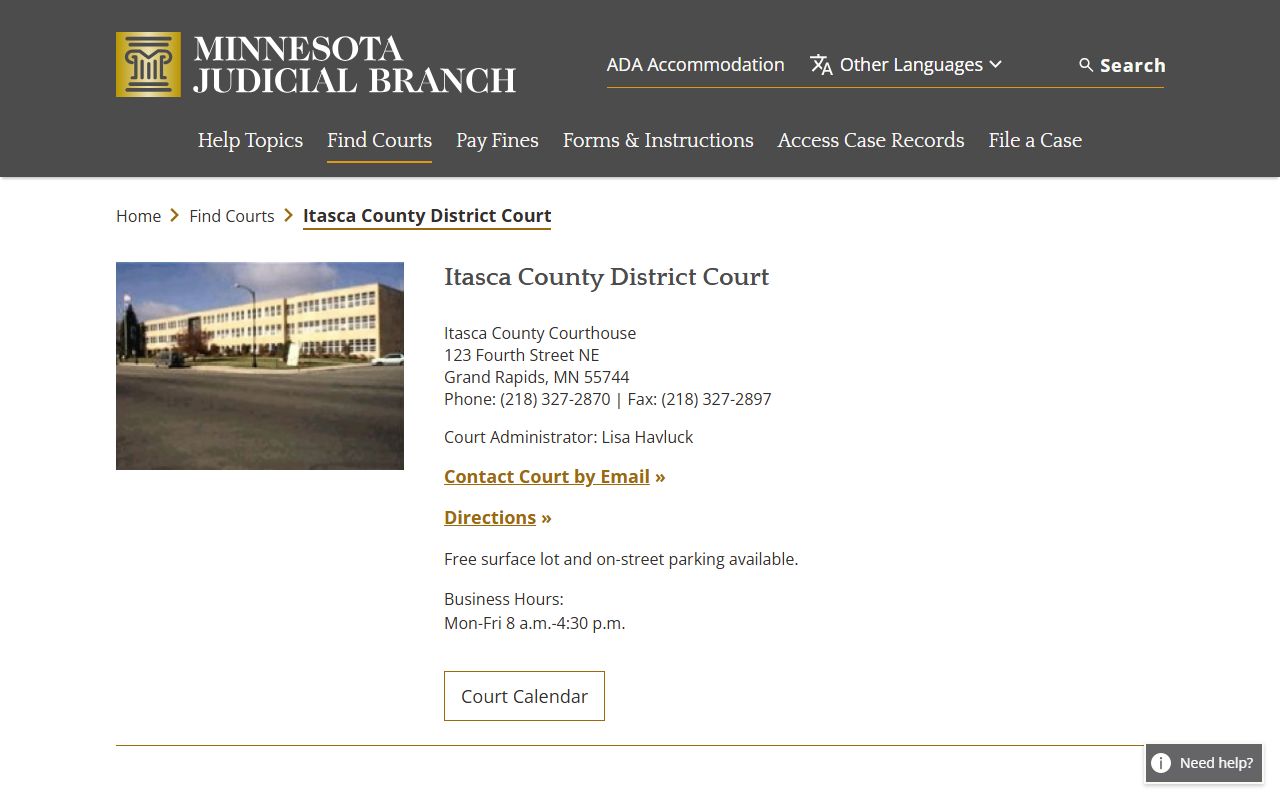
Check this page for the courthouse address, phone number, and links to filing forms and court resources.
Legal Resources in Itasca County
The 9th Judicial District provides self-help resources on its website. You can find links to legal aid organizations, court forms, and self-help guides. Legal aid groups in northern Minnesota may assist with Itasca County divorce cases if you meet their income criteria.
Court staff at the Grand Rapids courthouse help with process questions. They point you to the right forms and explain where to file them. They do not give legal advice. If you need more guidance, contact a legal aid office or hire a private attorney. The Minnesota State Bar Association runs a referral service that covers the Itasca County area.
Note: The 9th Judicial District self-help resources are available to all Itasca County residents at no charge.
Nearby Counties
Itasca County is in northern Minnesota and borders several other counties. You file your divorce case in the county where you live.