
Search Scott County Divorce Decree
Divorce decree records in Scott County are filed with the District Court in Shakopee. Scott County is part of the 1st Judicial District and sits just southwest of the Twin Cities metro area. The court processes all dissolution of marriage cases for Scott County residents and keeps records on file. You can search online, visit the courthouse, request copies by mail, or call the clerk's office for help finding records.
Scott County Overview
Scott County Court Info
The Scott County District Court is at 200 Fourth Avenue W in Shakopee. Jennifer Everett serves as court administrator. The main phone line is (952) 496-8200, and the fax number is (952) 496-8211. Scott County is part of the 1st Judicial District, which also includes several other counties in the southern metro and rural areas south of the Twin Cities. The Shakopee courthouse handles a high volume of cases, including divorce decree filings, because of the county's growing population.
| Address | 200 Fourth Avenue W, Shakopee, MN 55379 |
| Phone | (952) 496-8200 |
| Fax | (952) 496-8211 |
| Court Administrator | Jennifer Everett |
| Judicial District | 1st |
Scott County has grown a lot in recent years. The courthouse in Shakopee can be busy, especially during peak hours. If you plan to visit for a divorce decree search or to file paperwork, arriving early in the day is usually best.
How to Search Records
Searching for a Scott County divorce decree can be done a few ways. Start with Minnesota Court Records Online (MCRO), the free statewide search tool. It covers cases filed after July 2015. Enter a party name or case number to find case details and some documents. MCRO will not show sealed records or pre-2015 cases.
The Scott County court page on the Minnesota Judicial Branch website has current contact info, hours, and links to resources. Scott County also has a specific page for copy requests that explains the local process. This page is worth checking before submitting a request, since it may have details that the general state page does not cover.
For older divorce decree records, call (952) 496-8200 and the clerk's office can check the court's files. You can also use the general state copy request page for guidance on mail-in requests. Include the names of both parties, the case number if you have it, and your payment.
Fees
Scott County uses the statewide fee schedule for court records. Viewing divorce decree records through MCRO is free. Uncertified copies at the courthouse are free as well. Certified copies cost $14 per document. Certified copies carry the official court seal and are the version banks, agencies, and other institutions require. Filing a new divorce in Scott County costs about $400. Fee waivers are available for people who qualify based on income.
Mail-in requests need a check or money order payable to Scott County District Court. Most requests are processed within one to two weeks, though busy periods may take a bit longer.
Divorce Law Overview
Minnesota is a no-fault state for divorce. Under § 518.06, the only ground for a divorce decree is irretrievable breakdown of the marriage. No one needs to prove fault. At least one spouse must have lived in the state for 180 days before filing. The case goes to the county where either spouse resides, so Scott County handles cases for people living in Shakopee, Prior Lake, Savage, Jordan, and other parts of the county.
After filing, the other spouse gets served with the petition and summons. If both parties agree on all terms, the court can enter a divorce decree without a trial. Contested cases require hearings. Property is divided under § 518.58. Custody decisions follow the best interest factors in § 518.17. Default proceedings, when one spouse does not respond, fall under § 518.09.
Decree Contents
A Scott County divorce decree is the final court order that ends a marriage. It names both spouses, gives the date of marriage and the date of dissolution, and sets out all the terms. Property and debt division, spousal maintenance, and other financial matters are covered. When there are children, the decree spells out custody, parenting time, and child support. The length of the document depends on how much was in dispute. A straightforward agreement produces a shorter decree. A contested trial leads to a longer one with detailed findings from the judge.
Legal Help
Scott County residents have access to legal resources through several channels. The Minnesota Judicial Branch website offers self-help forms for people handling their own divorce decree cases. These cover the entire process from filing to the final hearing. Legal aid organizations in the metro area serve people who meet income thresholds. Court staff in Shakopee can answer questions about filing procedures but are not able to give legal advice.
Private attorneys in Scott County and the surrounding metro handle family law cases. Some offer free initial consultations. For cases involving complex property, business interests, or contested custody, working with a lawyer is generally the better option.
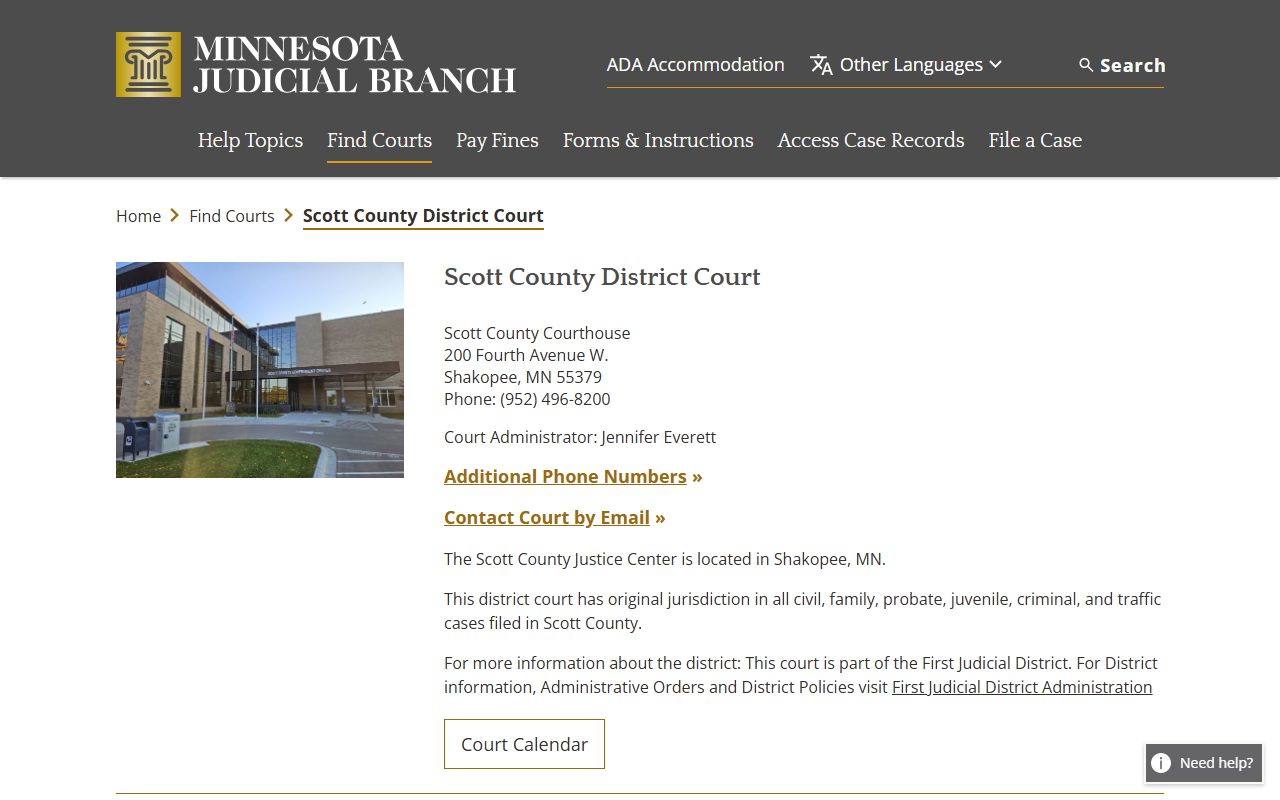
The Scott County court page on the Minnesota Judicial Branch website shows how to contact the court and access resources for divorce decree filings.
You can also check the Scott County copy requests page for details on ordering divorce decree copies from the court.
The Scott County copy requests page explains how to order copies of divorce decree records and other court documents from the 1st Judicial District.
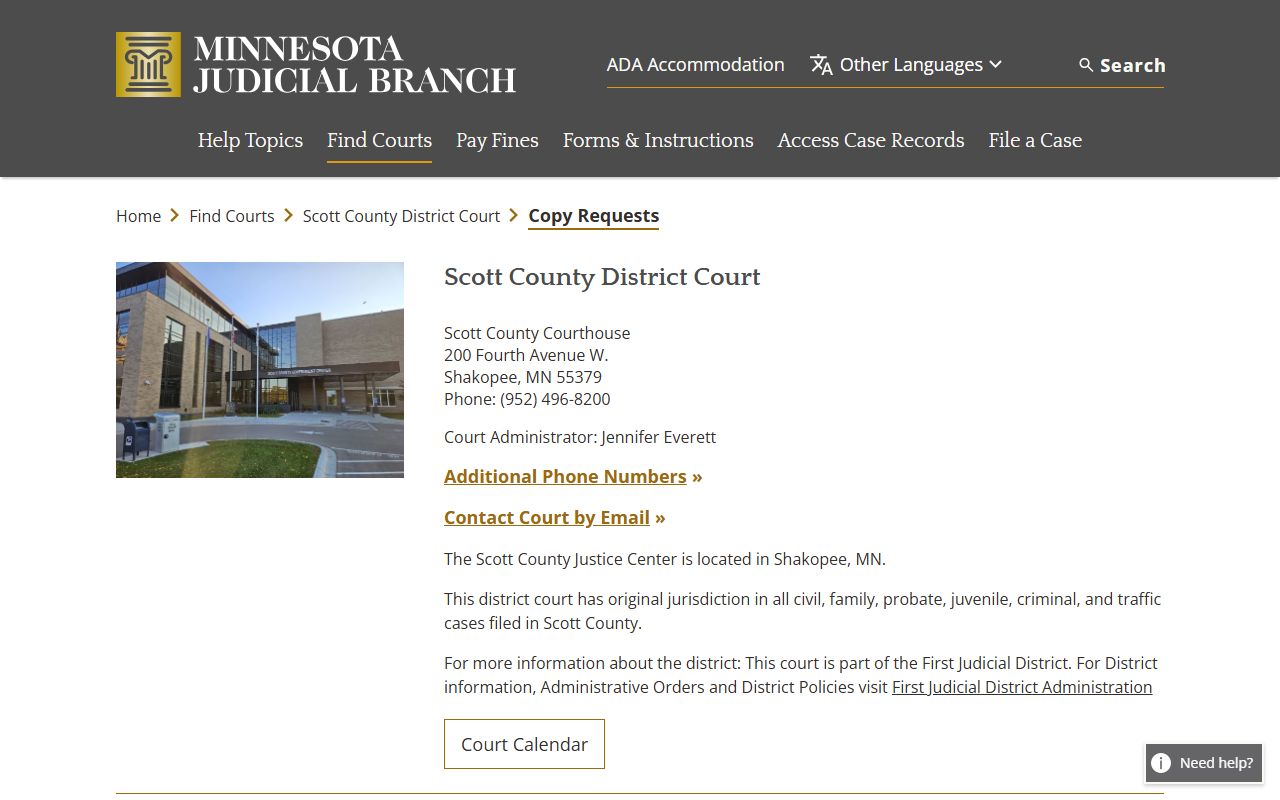
This page outlines the steps, accepted payment methods, and processing times for Scott County record requests.
Nearby Counties
Divorce decree records from counties bordering Scott are kept at their own courts. Each county maintains separate records.